Ask ten people how to clean a roof and most will say “pressure wash it.” For a lot of surfaces around your home that’s exactly right. For your roof, it can be an expensive mistake. Here’s the difference between the two methods and when each one makes sense.
What pressure washing is
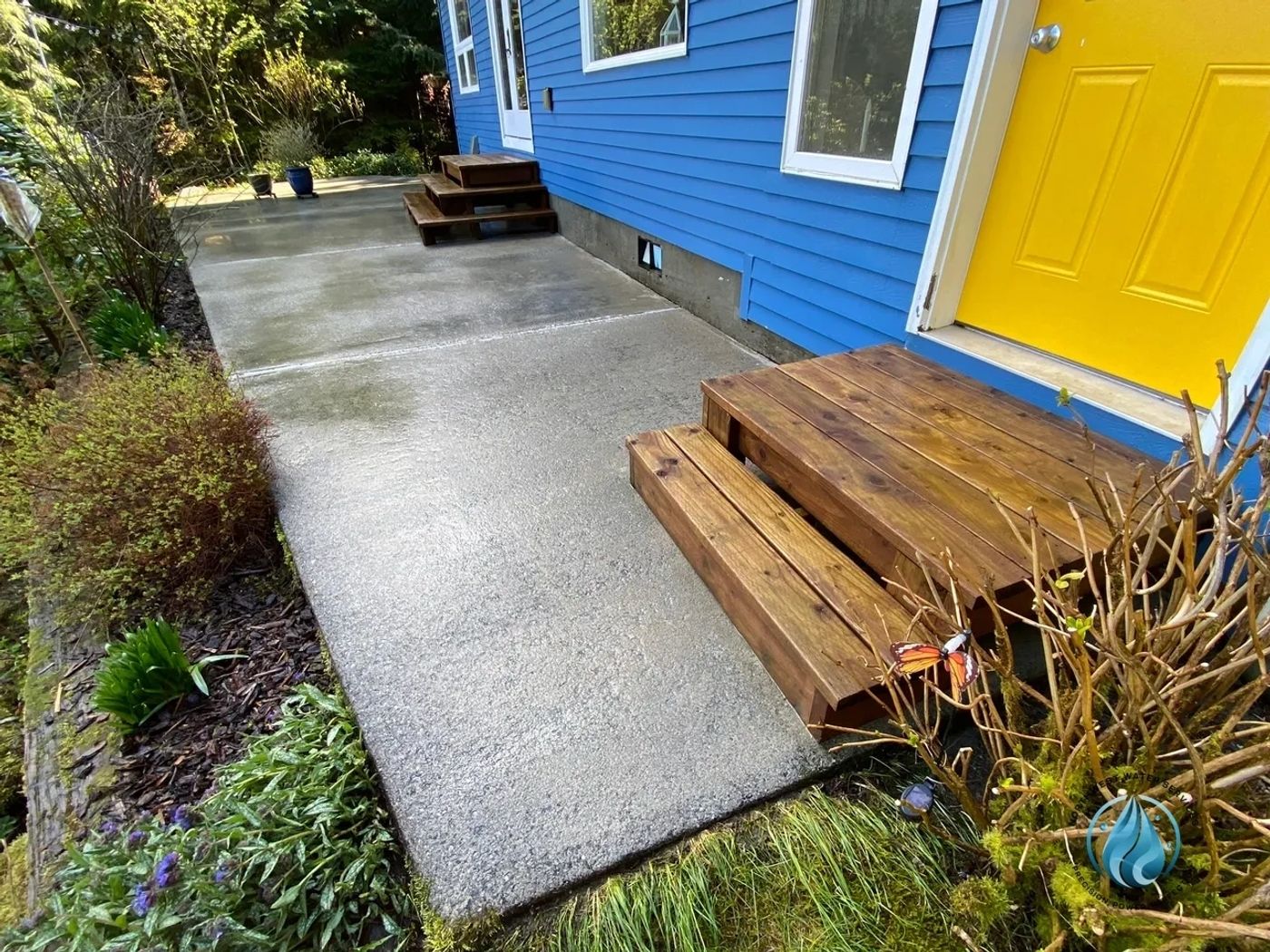
Pressure washing uses a high-pressure stream of water to blast dirt, moss and grime off a hard surface. It’s fast and very effective on surfaces that can take it — concrete driveways, sidewalks, parking lots and other flat hardscape.
For flat concrete we use surface cleaners: a rotating, hooded tool that cleans evenly without the stripes and wand marks you get from a hand-held nozzle. Because it’s so efficient, we offer driveway and concrete cleaning at a reduced rate.
What soft washing is
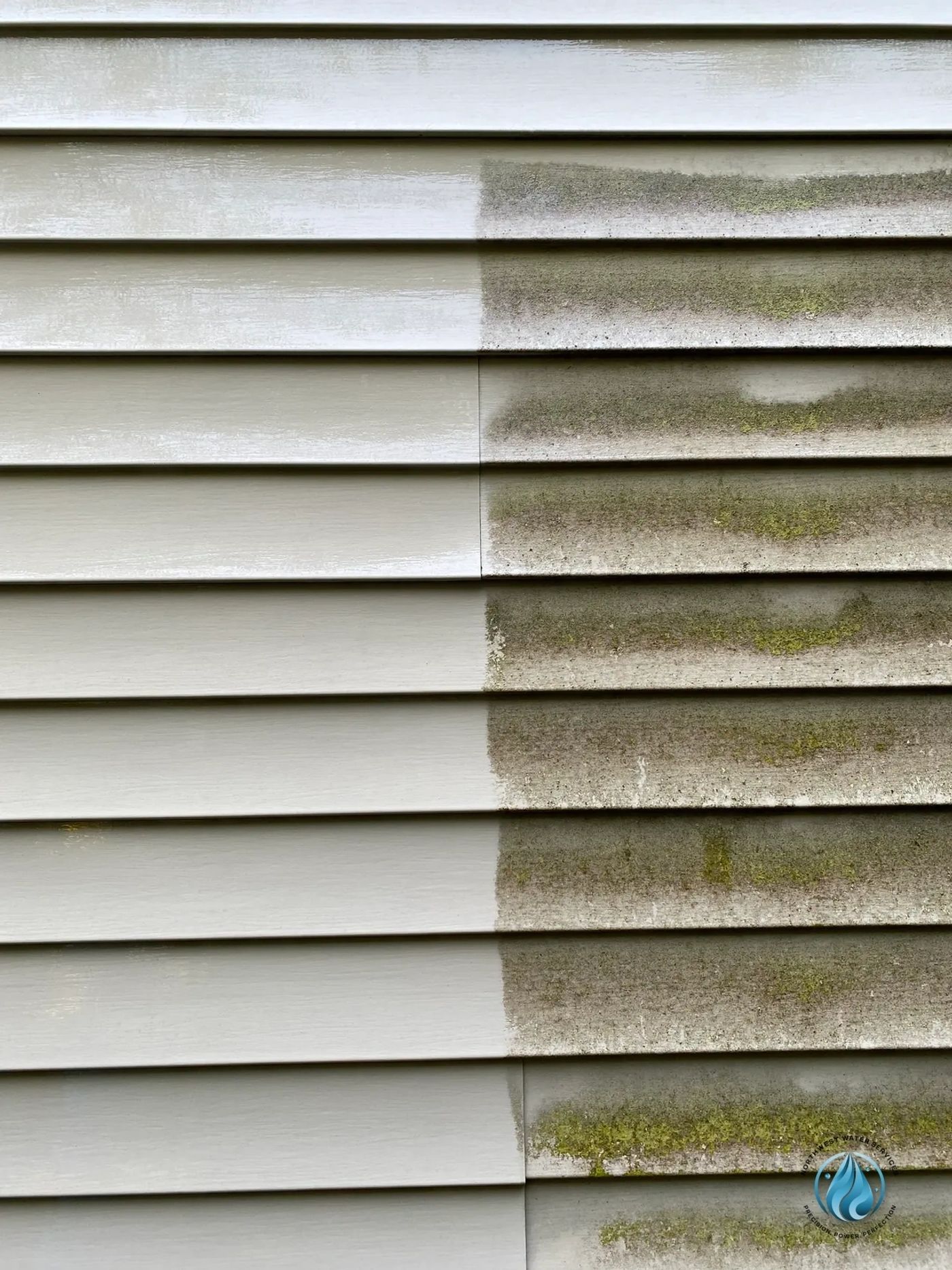
Soft washing uses low pressure and a cleaning solution to kill and remove moss, algae, lichen and organic staining. Instead of relying on force, the solution does the work, and the surface is rinsed gently.
That makes it the right choice for surfaces that high pressure can damage: roofs, siding, wood and composite decking.
Why roofs need a soft wash
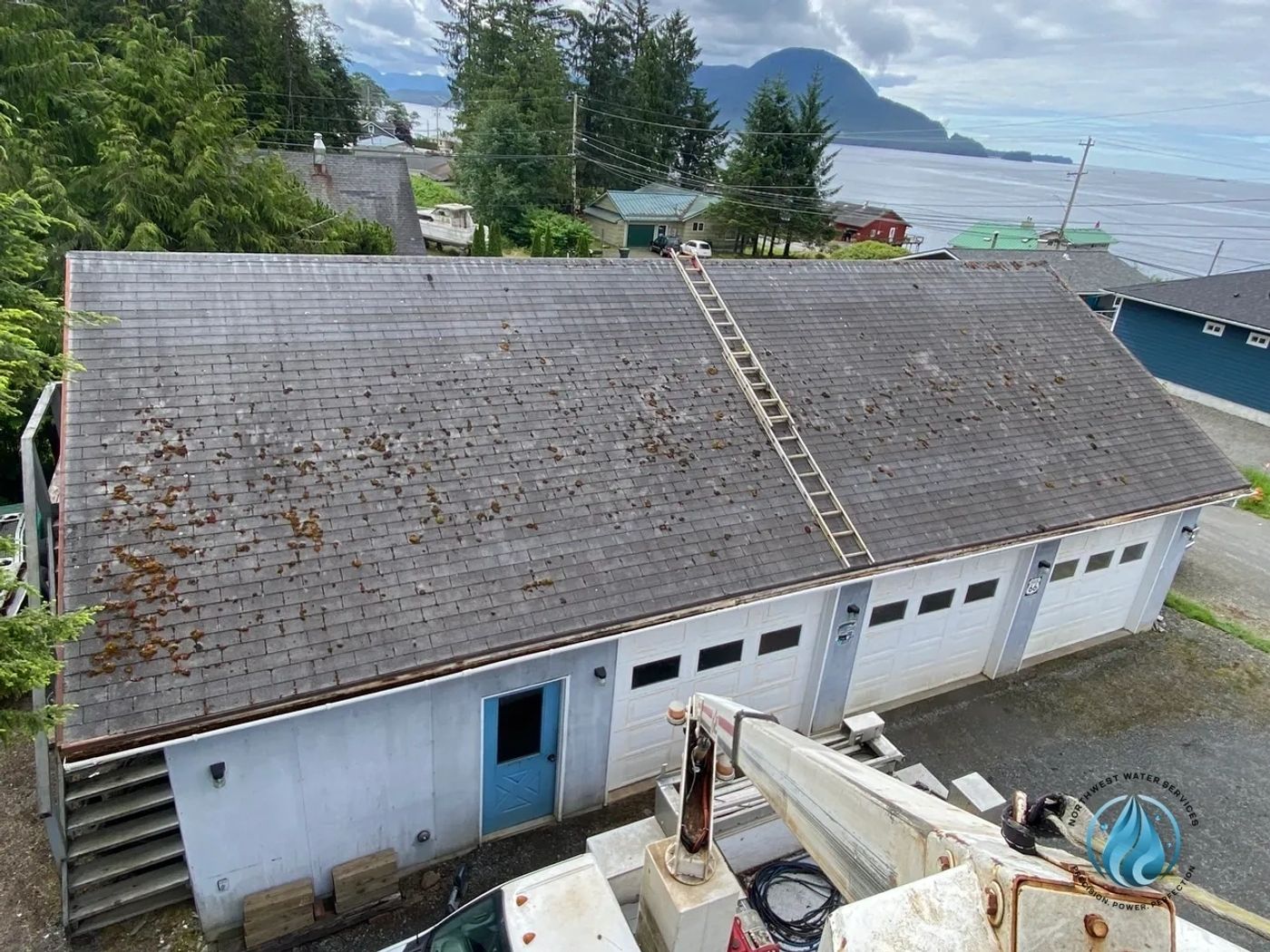
High-pressure water can strip the protective granules from asphalt shingles, drive water under the shingle edges, and damage flashing and seals. That’s why roofing manufacturers and the Asphalt Roofing Manufacturers Association (ARMA) recommend against it.
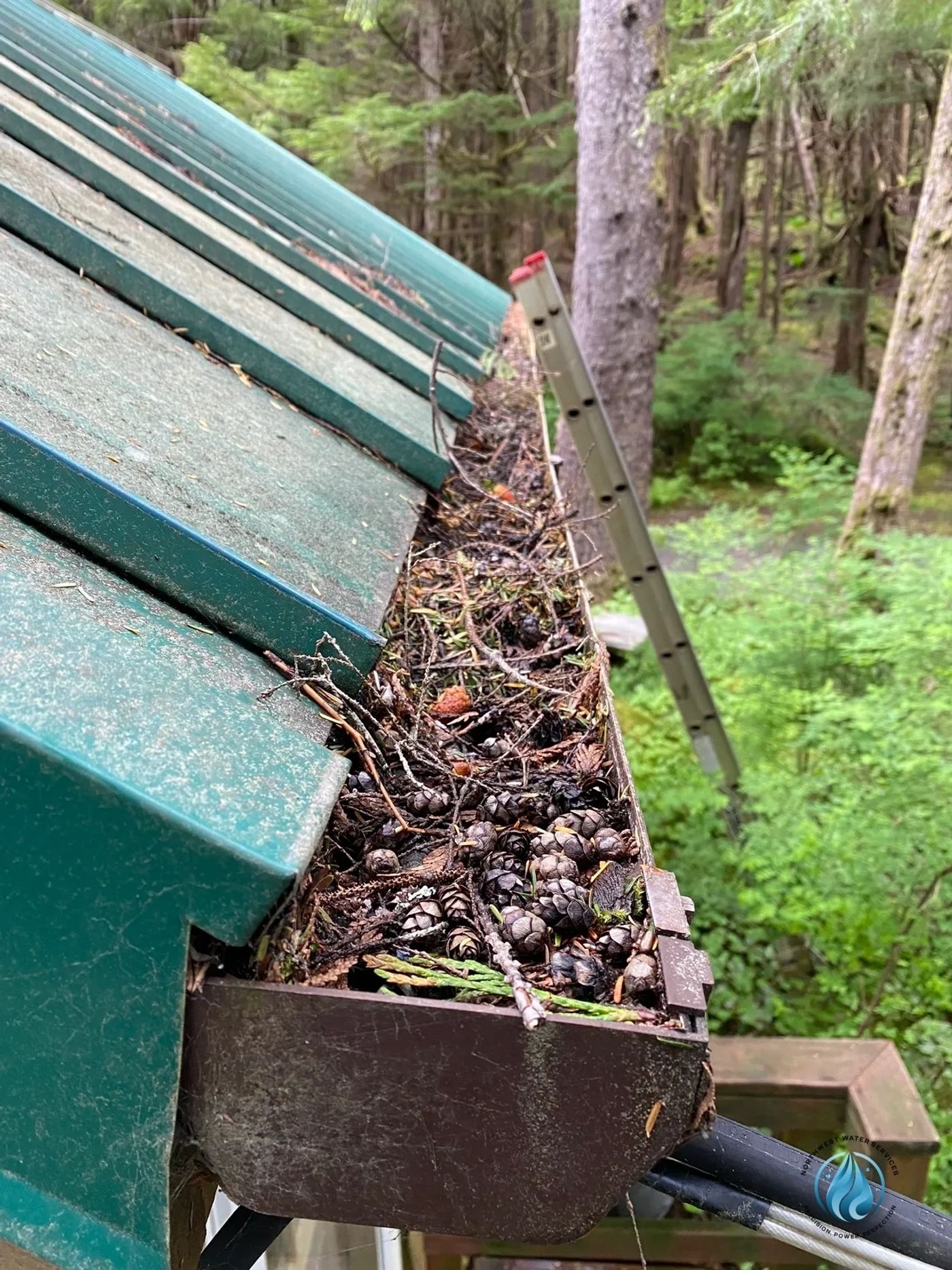
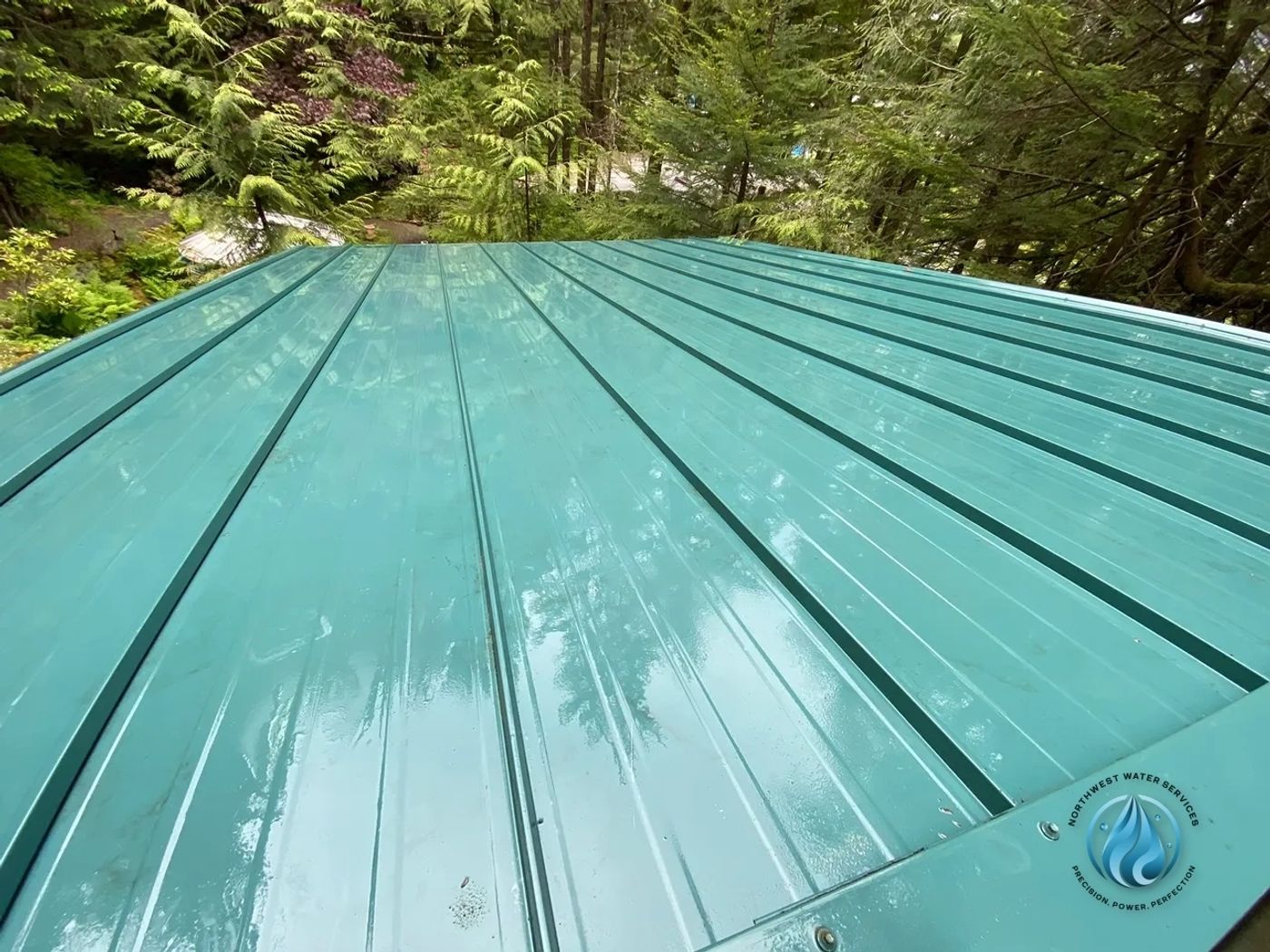
Our roof wash uses a state-of-the-art soft-wash system to provide an ARMA-approved wash that preserves your roof warranty. We work on tile, composite and metal roofs, and we specialize in metal standing-seam.
Which method for which surface?
- Asphalt / composite shingle roofs: soft wash
- Metal and standing-seam roofs: soft wash
- Tile roofs: soft wash
- Vinyl and stucco siding: soft, low-pressure house wash
- Brick: careful low-pressure method to avoid chipping, cracking and mortar damage
- Wood and cedar fences and decks: low pressure to prevent furring (raised, fuzzy wood fibers)
- Trex and composite decking: soft wash, with the solution strength matched to the age and condition of the boards
- Concrete driveways, sidewalks and parking lots: pressure washing with a surface cleaner
Delicate surfaces — cedar, older Trex, brick — take more care and time, so they carry a small added charge. It’s far cheaper than replacing damaged boards or repointing mortar.
Not sure what your home needs?
Send us a few photos and we’ll tell you. Call or text (360) 800-3486 or use the quote form. Prices start at $150, and new customers get 20% off with code nwws20.